Djerba Maison Location
A bilingual rental website and booking management app, built to give visitors arriving from Meta ads a straightforward path from discovering an apartment in Djerba to requesting a stay.
A direct path from an ad to a stay
I built Djerba Maison Location from the ground up with a specific purpose: make it straightforward to turn interest from Meta ads into bookings. The product brings together a public rental website and a private management app for an apartment in Midoun, Djerba. Visitors can explore the property, check their dates, understand the price, and send a request directly to the owner.
That purpose gives the website a clear job. Someone arriving from an ad needs enough information to decide whether the apartment suits their stay, followed by an obvious next step. The public experience connects those two parts: showing the accommodation and making it easy to ask for it.
Show the apartment, then make the next step clear
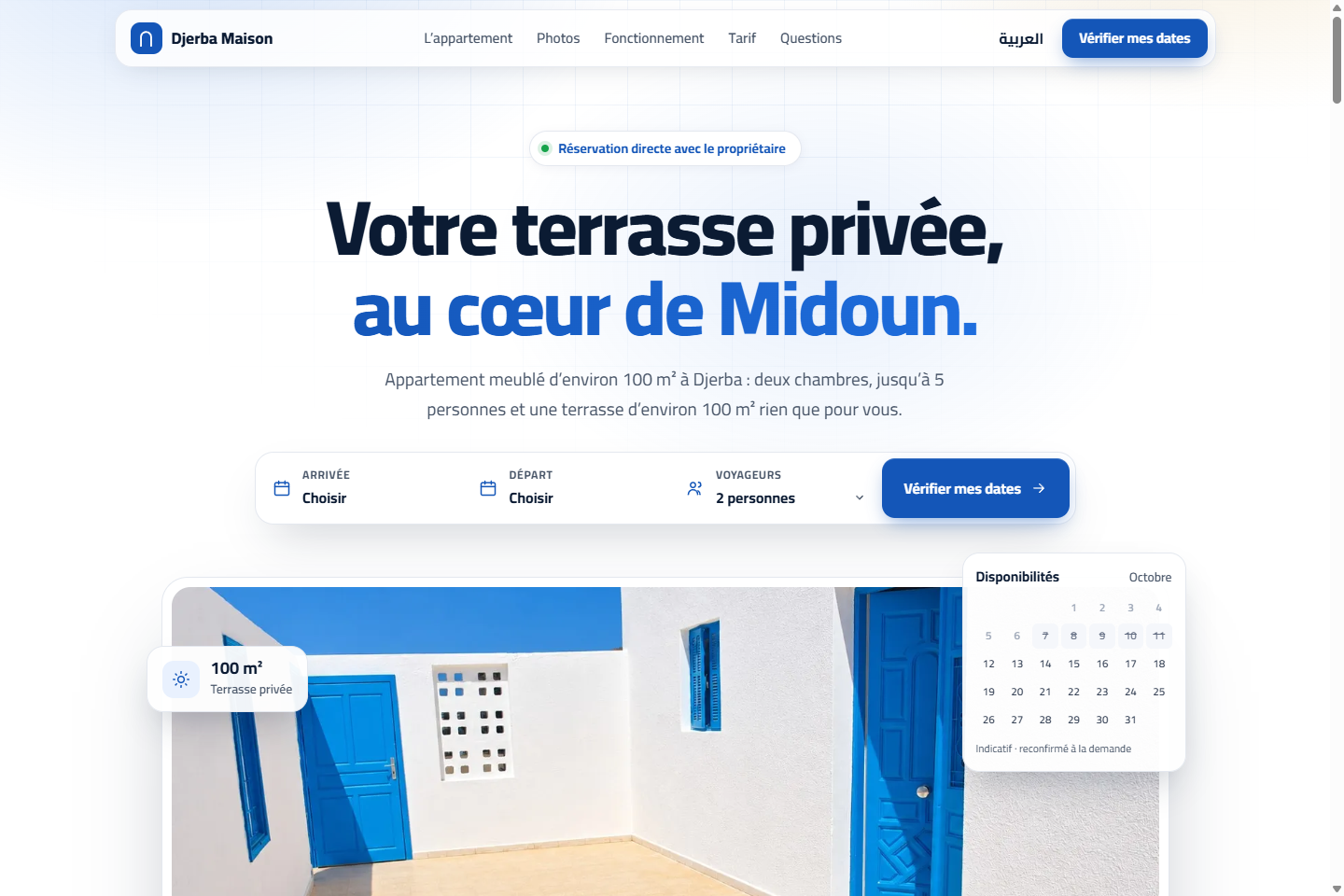
The homepage leads with the apartment's private terrace, a property photograph, and date selection. Further down, visitors can explore room photos, sleeping arrangements, amenities, location information, and frequently asked questions. The gallery lets them browse by room rather than relying on a single cover image.
These details give the date check context. A visitor can see what is offered before entering their arrival, departure, and number of guests. Calls to action throughout the page return to the same booking flow, while direct contact options provide another way to ask a question.
From dates to a booking request
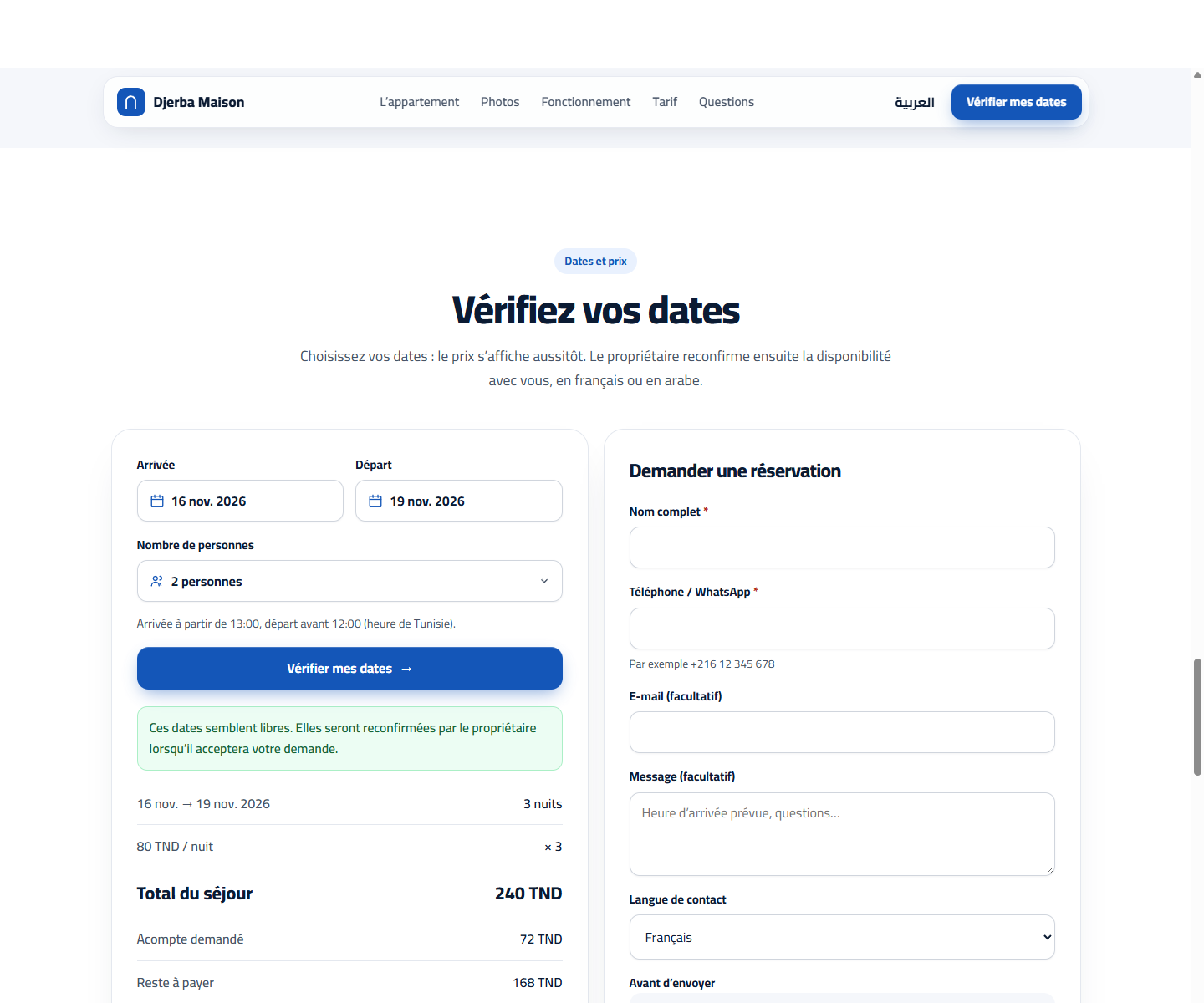
The date check shows an indicative availability response and a breakdown of the stay price. When a request can proceed, a form collects the guest's contact details, preferred contact language, and an optional message.
The site makes the handoff explicit: sending a request does not confirm a reservation, and no payment is required at that stage. The owner reconfirms availability and communicates the next steps. This keeps the website's promise aligned with how the stay is actually arranged, while still giving an interested visitor a concrete action to take.
French and Arabic, including on a phone
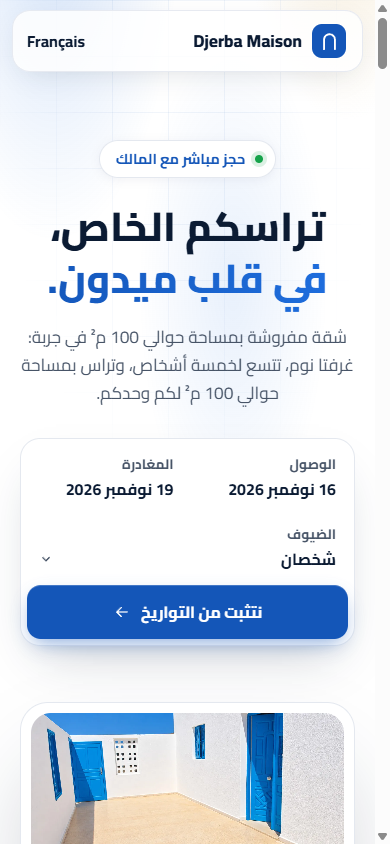
The public site is available in French and Arabic, with a right-to-left layout for Arabic. Switching languages preserves the selected stay dates and guest count, so visitors can continue the same enquiry in the language they prefer.
On a narrow screen, the date controls and property information stack into a mobile layout. For a journey that starts in a social feed, having the booking path available on a phone is part of the core experience.
Support the booking after the click
Behind the public website, the owner has a private workspace for enquiries, reservations, a calendar, and day-to-day rental management. The project therefore covers both sides of the journey: helping a visitor request a stay and giving the owner a way to handle that interest.
The public site also offers a choice about advertising measurement, and declining it leaves the booking flow available. The overall product stays focused on the same purpose I started with: a straightforward route from interest in an ad to a stay arranged directly with the owner.